
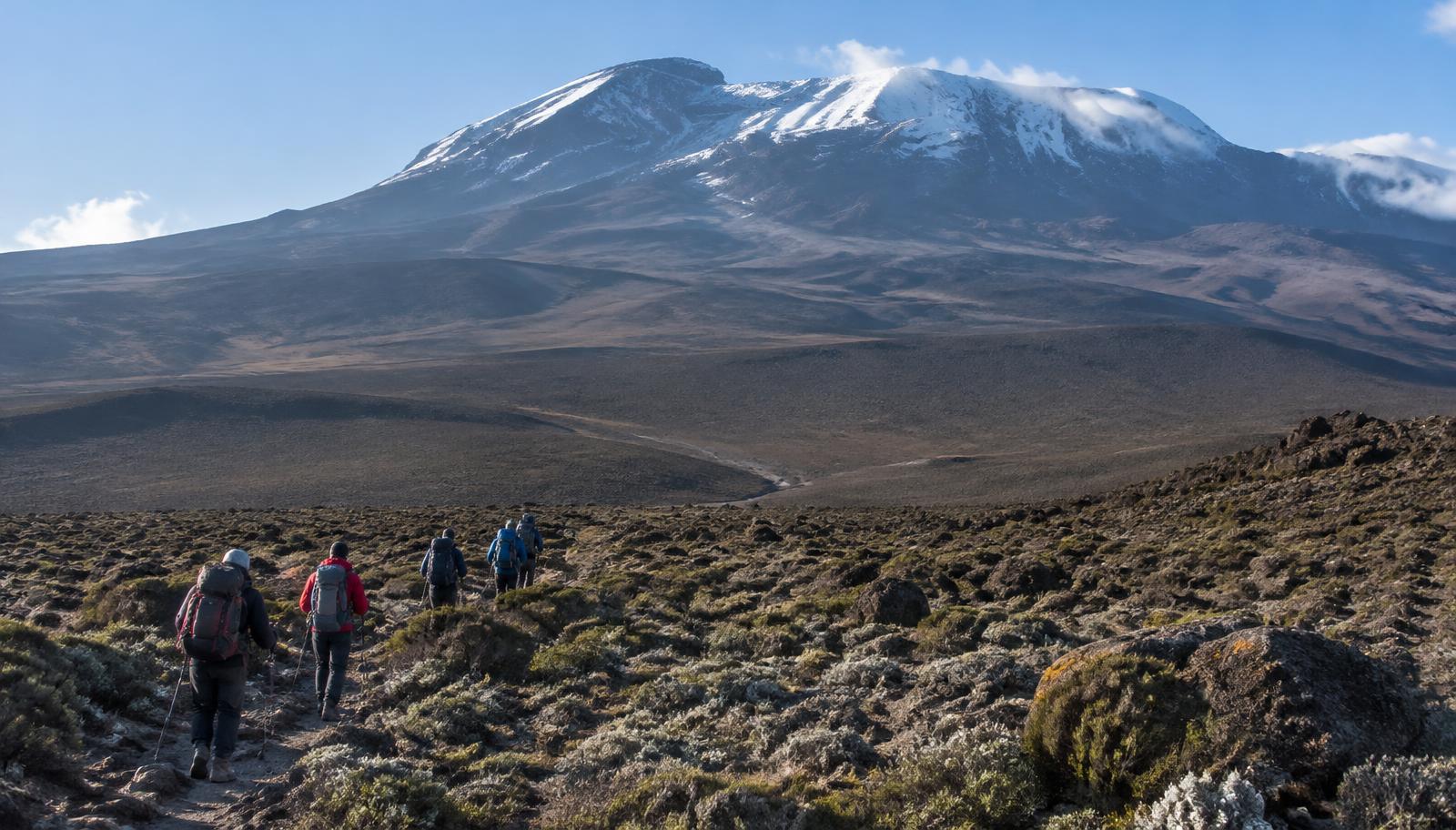
Kilimanjaro Trekking
Northern Circuit Route
Difficulty Moderate (long) · 95%+ summit success · 9 days
Route Overview
Why climb the Northern Circuit Route?
The Northern Circuit is the longest and newest route up Kilimanjaro, completing a near-full circumnavigation of the mountain. It shares the Lemosho approach but then traverses the seldom-visited northern slopes before summiting via Gilman's Point.
With 9 days on the mountain, acclimatisation is exceptional — summit success exceeds 95%. You'll see parts of Kilimanjaro almost no other climbers visit, with vast moorland panoramas and frequent solitude.
Route Map
Begins on Lemosho, then breaks north at Moir Hut to circle around Kibo's northern slopes — the wildest and most remote stretch of trail on the mountain.
Altitude Profile
Londorossi 2,100m → Shira Plateau → Moir Hut 4,200m → Buffalo Camp 4,020m → Third Cave 3,870m → School Hut 4,800m → Uhuru 5,895m → Mweka.
9-Day Itinerary
Starting from US$2,850 per person
- 1
Londorossi Gate to Mti Mkubwa (2,780m)
Rainforest trek after Moshi transfer.
- 2
Mti Mkubwa to Shira 1 (3,610m)
Onto the Shira Plateau.
- 3
Shira 1 to Moir Hut (4,200m)
Acclimatisation day across the plateau.
- 4
Moir Hut to Buffalo Camp (4,020m)
Northern traverse — wild terrain, exceptional solitude.
- 5
Buffalo Camp to Third Cave (3,870m)
Continue around the northern slopes.
- 6
Third Cave to School Hut (4,800m)
Steep climb to summit base camp.
- 7
Summit Day → Millennium Camp
Midnight start via Gilman's Point to Uhuru Peak. Long descent.
- 8
Millennium Camp to Mweka Camp
Continued descent through moorland.
- 9
Mweka Camp to Gate
Forest descent, certificate ceremony, transfer to Moshi.
Pricing
All-inclusive group price per person. Solo & private rates on request.
| Duration | Group of 2 | Group of 4+ | Solo |
|---|---|---|---|
| 9 days | US$2,850 | US$2,700 | US$3,200 |
What's Included
- All park, camping & rescue fees
- Professional KPAP-partner guides (1:2 ratio)
- Ethical porters (correct loads, fair wages)
- Mountain cook + 3 hot meals daily
- Mountain tents, mattresses & dining tent
- Round-trip transfers from Moshi/Arusha
- Bottled & filtered water on the mountain
- Pulse oximeter daily health checks
- Emergency oxygen & first aid kit
- Summit certificate
What's Excluded
- International flights
- Tanzania visa (US$50–100)
- Travel & evacuation insurance (required)
- Personal climbing gear (rentable in Moshi)
- Tips for guides, cook & porters
- Drinks & snacks beyond meals
- Pre/post-climb accommodation
Recommended Packing List
- Waterproof hiking boots (broken in)
- 4-season sleeping bag (-15°C rating)
- Down jacket + insulated mid-layer
- Waterproof shell jacket & trousers
- Trekking poles, headlamp + spare batteries
- Thermal base layers (top + bottom)
- Sun hat, beanie, balaclava & gloves
- Daypack 30L + 70L duffel (porters carry)
- Sunglasses (cat 3), SPF 50+ sunscreen
- Water bottles + bladder (3L capacity)
All gear is available to rent in Moshi from US$5/item/day.
Frequently Asked Questions
Is the Northern Circuit harder?+
It's longer but easier per day. The extra acclimatisation makes summit day significantly easier than on shorter routes.
How crowded is it?+
Only ~5% of climbers use this route. Northern slopes are almost completely empty — you may not see another group for two days.
What is the best time to climb Kilimanjaro?+
January–early March and June–October are the driest, clearest months. Full-moon dates fill up first — book 4–6 months ahead.
Do I need to be super fit?+
Kilimanjaro is a long, high-altitude trek — not a technical climb. If you can comfortably hike 6–7 hours a day at home, you can summit with proper acclimatisation.
How serious is altitude sickness?+
Above 3,000m, mild symptoms (headache, nausea) are common. Our guides carry pulse oximeters and emergency oxygen, monitor you twice daily, and descend at the first sign of severe AMS.
Are tips really required?+
Tipping is the cultural norm and a large part of your crew's income. We recommend US$300–400 per climber, pooled and distributed transparently.
What happens if I can't summit?+
You descend with an assistant guide while the rest of the group continues — no extra cost, no refund (park fees are non-refundable).
Where to stay before & after your Northern Circuit Route climb
Most climbers spend 1–2 nights in Moshi before the trek for briefing and gear check, and 1 night after for a hot shower and celebration dinner. We've hand-picked hotels in Moshi and Arusha across every budget — from US$45 guesthouses to US$320 luxury 5-star. Book any of them through us as part of your climb package for 10–20% below public rates.
Extend your Northern Circuit Route trek
Combine your Kilimanjaro climb with a Tanzania safari, Zanzibar beach break or acclimatisation warm-up — most guests do both.